If you are drawn to Hillsborough, chances are it is not just because of square footage or a street address. It is because the homes here feel distinctive, private, and deeply tied to their sites. Understanding the architectural styles that shape Hillsborough can help you read a property more clearly, whether you are buying, preparing to sell, or planning future updates. Let’s dive in.
Why Hillsborough Architecture Stands Out
Hillsborough is best understood as an estate town, not a place defined by one dominant look. The town’s own design guidance describes a wide range of residential styles, shaped by large parcels, curving roads, mature landscaping, and a long history of estate development.
That history still matters today. Early estates such as Uplands, Home Place, and La Dolphine were subdivided over time, often leaving the original house and several acres intact. As a result, Hillsborough developed a layered architectural identity rather than a uniform one.
The town also treats architecture as part of a larger visual and planning framework. In Hillsborough, design is tied to siting, landscaping, privacy, and long-term preservation, not just curb appeal.
French Classical and Beaux-Arts Influence
One of Hillsborough’s clearest architectural reference points is French Classical and Beaux-Arts design. Carolands stands as the most prominent local benchmark, described by the California Office of Historic Preservation as an American Renaissance estate from 1915 to 1916, inspired by Vaux le Vicomte and the Palace of Versailles.
In practical terms, this style often emphasizes symmetry, formal massing, and a sense of arrival. You may see balanced façades, grand entries, and ornamentation that feels deliberate rather than casual.
This influence helps explain why some Hillsborough homes feel stately even when they are not historic estates themselves. The visual language of proportion, structure, and form still informs how buyers and sellers think about elegance in the local market.
Colonial Revival and Georgian Traditions
Colonial Revival and Georgian-inspired homes also have a place in Hillsborough’s architectural story. Town review materials reference a three-story Colonial Revival home by Angus McSweeney from the 1930s, along with nearby homes featuring Georgian design elements.
These homes are often recognized by orderly composition and visual balance. Façade symmetry, consistent window placement, and restrained detailing tend to be part of the appeal.
For buyers, this style can read as timeless and composed. For sellers, preserving the proportions and details that support that sense of consistency can be especially important when preparing a home for market.
Mediterranean and Tuscan Estate Appeal
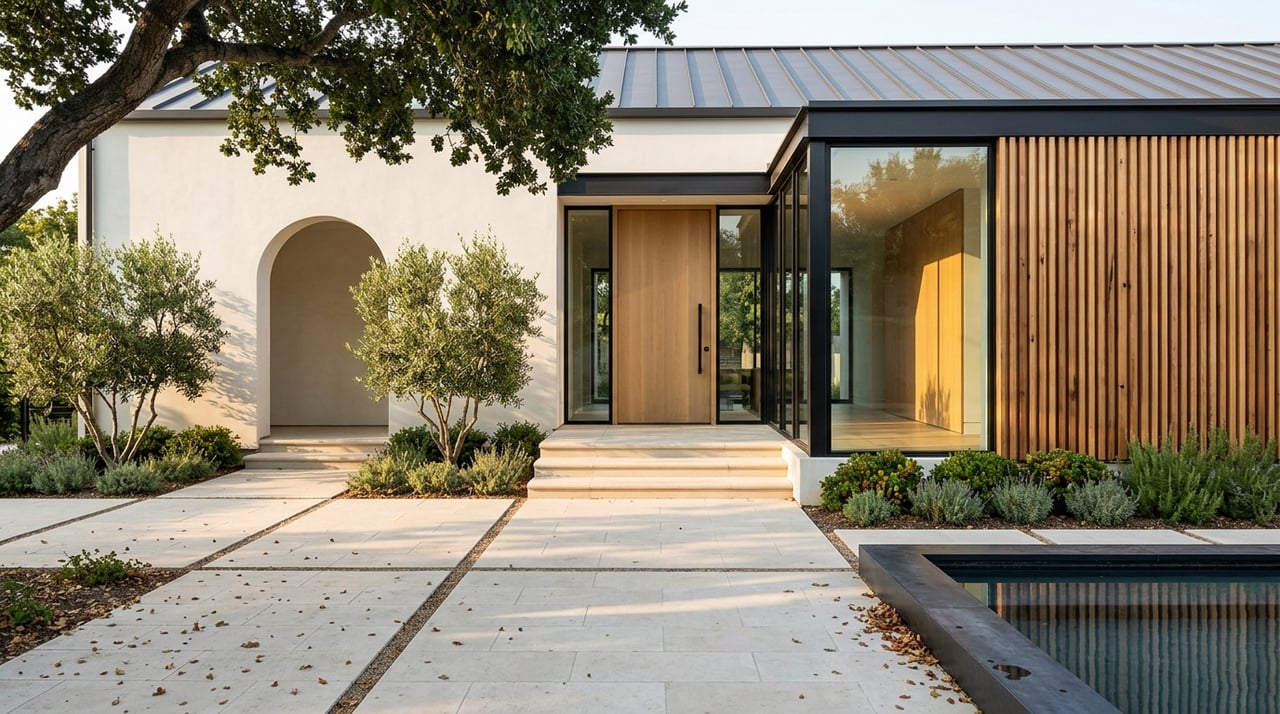
Mediterranean and Tuscan Mediterranean Revival styles remain part of Hillsborough’s active design vocabulary. Town review records show that these styles continue to appear in newer estate construction, which tells you they are not simply historic references.
This style often works naturally with California light and indoor-outdoor living. Stucco finishes, tile roofing, arches, and landscaped outdoor areas can create a strong connection between house and site.
In Hillsborough, that connection matters. The town’s guidance treats the house and landscape as one composition, so a Mediterranean home often feels most successful when the architecture, hardscape, and planting work together.
Tudor and French Eclectic Character
Tudor and French Eclectic Tudor homes add another layer to Hillsborough’s mix. The town’s design guidelines specifically identify French Eclectic Tudor and describe Tudor forms as recognizable by tall, high-pitched roofs and arched openings.
These homes often stand out because the roofline does so much of the visual work. Steep roof forms, pronounced entries, and distinctive openings can create a memorable silhouette from the street.
That makes maintenance and remodeling decisions especially important. When a home’s identity depends on strong roof form and visible detailing, changes that feel out of scale or out of character may weaken its overall appeal.
Contemporary, Ranch, and Modernist Homes
Hillsborough is not only about traditional architecture. Town materials reference split-level Contemporary projects, ranch-to-contemporary replacements, Modernism, California Ranch, and Bay Region styles.
This is important for today’s market because many buyers want openness, light, and a closer relationship between indoor and outdoor space. Contemporary and modernist homes can deliver that through simplified forms, broad glazing, and more relaxed façades.
At the same time, these homes are still shaped by local review standards. In Hillsborough, even a modern design must respond to the site, street presence, landscaping, and the broader visual quality of the area.
How to Read a Hillsborough Home
When you tour a property in Hillsborough, it helps to look beyond labels like “Mediterranean” or “Colonial.” The town’s design vocabulary offers a few useful concepts that can help you understand what gives a home its architectural identity.
Massing
Massing is the overall volume and shape of the house. A home with coherent massing tends to feel intentional, while one with piecemeal additions may feel less resolved.
Roof Form
Roof form is the profile of the roof, whether steep, low-slung, or flat. In many Hillsborough homes, the roof is one of the strongest clues to the home’s style.
Fenestration
Fenestration refers to the arrangement and proportion of windows. Balanced window placement can support a traditional style, while larger expanses of glass may reinforce a more contemporary design.
Siting and Setback
Siting and setback describe how a home is placed on the lot and how far it sits from the street. In Hillsborough, this affects privacy, street presence, and how the home relates to topography.
Ornamentation
Ornamentation includes visible details such as trim, arches, and decorative features. These details can define a style, but they usually work best when they feel consistent with the home’s overall form.
Style Affects More Than Appearance
In Hillsborough, architecture is never just cosmetic. The town’s guidelines make clear that privacy, grading, landscaping, and the placement of features like garages all contribute to the success of a home on its lot.
For example, the town encourages preserving mature and native trees, minimizing grading, and using contour grading that follows the slope. It also notes that garages should be placed to the side when feasible so they do not dominate the street view.
That means the way a home lives can be closely tied to its design. Outdoor privacy, views, circulation, and curb presence often come from the relationship between the house and the landscape, not just the interior layout.
Privacy, Landscaping, and Wildfire Planning
Many Hillsborough properties are heavily vegetated, but privacy planning here also has to account for wildfire rules. The town notes that many homes are in the Wildland Urban Interface, where shrub height and tree spacing may be regulated.
This matters because privacy screening cannot always rely on dense hedges or continuous tree walls. In practice, privacy often has to be created through layered, fire-safe landscaping and thoughtful site design.
For buyers, this is worth understanding early. For sellers, it can help explain why well-maintained, site-appropriate landscaping supports both presentation and long-term usability.
Remodeling in Hillsborough Requires a Broader View
If you own a home in Hillsborough, style should guide remodeling decisions from the start. The town says authenticity depends on consistent massing, roof form, façade symmetry, window proportion, materials, and ornamentation, along with high-quality craftsmanship and durable materials.
Most design changes require approval as well as permits. The Architecture and Design Review Board reviews new homes, additions, landscaping, fencing, and gates, which means exterior decisions are rarely isolated from the larger character of the property.
Homes over 50 years old may also trigger historic review under CEQA if they have distinctive style, a notable architect, or other historic significance. If a property is treated as a historic resource, project-related design review is measured against the Secretary of the Interior’s Rehabilitation Standards.
What Buyers and Sellers Should Keep in Mind
For buyers, architectural style can affect more than taste. It can shape maintenance needs, future review pathways, exterior improvement options, and even how privacy is created on the lot.
For sellers, original details and consistent design language can support market appeal. Mismatched alterations, visible inconsistencies, or updates that ignore the home’s architectural logic may draw more scrutiny from both buyers and the town.
This is where a thoughtful, local approach matters. Preparing a Hillsborough home for sale often means identifying which features strengthen the home’s architectural story and which updates may help present that story more clearly.
Why Architectural Context Matters in a Sale
In Hillsborough, buyers are often responding to a full composition. They are noticing the home’s approach from the street, how the structure sits on the land, whether the landscaping feels integrated, and whether the exterior details make sense together.
That is why architecture can influence marketability in subtle but important ways. A home that feels cohesive often presents as better cared for, more intentional, and easier to understand.
For sellers, that does not always mean major renovation. Sometimes the most valuable work is selective: refining landscaping, simplifying distracting elements, improving exterior consistency, and presenting the home in a way that respects its original character.
If you are thinking about buying or selling in Hillsborough, the right guidance can help you look past surface impressions and understand how architecture, site planning, and presentation work together. For a calm, strategic approach tailored to Peninsula homes, connect with Mary Murphy and Robert Doyle.
FAQs
What architectural styles are common in Hillsborough homes?
- Hillsborough includes a wide range of styles, including French Classical, Beaux-Arts, Colonial Revival, Georgian-influenced homes, Mediterranean, Tuscan Mediterranean Revival, Tudor, French Eclectic Tudor, Contemporary, Ranch, and Modernist designs.
Why does architecture matter when buying a Hillsborough home?
- In Hillsborough, architecture can affect privacy, site layout, future remodeling options, maintenance needs, and how a home may be reviewed for exterior changes.
Do Hillsborough remodels usually need design approval?
- Yes. The town says most design changes require design approval and a permit, and the Architecture and Design Review Board reviews items such as new homes, additions, landscaping, fencing, and gates.
How does landscaping affect Hillsborough home design?
- Hillsborough treats the house and landscape as one composition, with guidance that emphasizes preserving mature and native trees, minimizing grading, and using landscaping to help define private outdoor space.
Are older Hillsborough homes subject to historic review?
- They can be. Homes over 50 years old may trigger historic review under CEQA if they have distinctive style, a notable architect, or other historic significance.
What should sellers preserve in a Hillsborough home before listing?
- Sellers should pay close attention to features that support the home’s architectural consistency, such as massing, roof form, window proportion, materials, ornamentation, and the relationship between the home and its landscaping.