Wondering whether Belmont’s hillsides or flatter streets are the better fit for your next move? In a city this compact and this expensive, the answer can shape your daily routine more than you might expect. If you understand how views, access, noise, parking, and errands vary from one part of Belmont to another, you can make a more confident choice. Let’s dive in.
Why the Belmont Split Matters
Belmont covers about 4.6 square miles and stretches from the Bay into wooded hills. That small footprint creates a sharp contrast between hillside living and the flatter corridor near Belmont Village, El Camino Real, and the Caltrain station.
That contrast matters even more in a high-cost market. Census QuickFacts cited by the city shows a median value of owner-occupied housing units above $2,000,000 and median gross rent of $2,875, so choosing the right location is not just about style. It is about how you want to live day to day.
What Counts as Hillside vs. Flats
Hillside Areas in Belmont
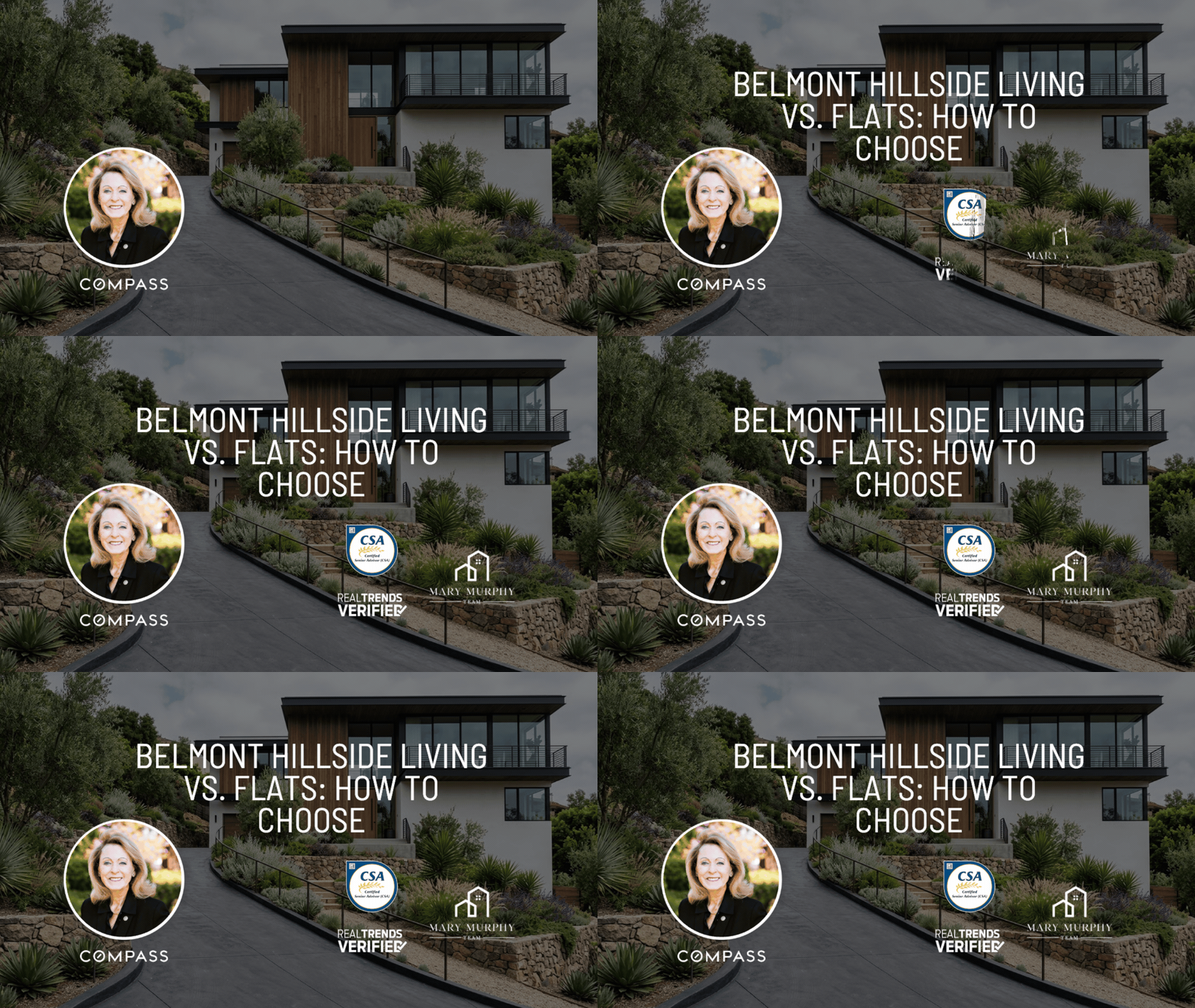
Belmont’s hillside areas include the San Juan Hills and Western Hills. The city identifies these areas as protected for natural character and environmental sensitivity, with planning policies that aim to reduce density and grading and preserve more open space.
For you as a buyer, that means hillside properties can come with more variables than a typical home search. The city notes that steep slopes, geological hazards, limited access and infrastructure, environmental protections, and zoning rules can all affect what a property offers and what future changes may involve.
Flat and Corridor Areas in Belmont
On the flatter side, Belmont Village, El Camino Real, and the Caltrain station area form a more transit-connected corridor. The Belmont Village Specific Plan describes this part of the city as a Priority Development Area because of its access to transit and its role as Belmont’s central gathering area.
This area is also tied to shops, restaurants, civic spaces, parking facilities, and community destinations. If you want a location that feels more connected to services and public spaces, this side of Belmont usually delivers that more directly.
How Housing Feels Different
Hillside Homes Tend To Be More Site-Specific
In the hills, two homes that look close on a map can live very differently. Driveway access, slope, grading, utility access, and orientation often matter just as much as square footage or finishes.
The city specifically advises hillside buyers to review planning and zoning documents, confirm roadway and utility access, and consult planning staff or technical experts before buying. In practical terms, that makes hillside shopping more custom and more address-specific.
Flat Areas Offer More Standardized Access
The flatter corridor includes clearer examples of transit-oriented multifamily and mixed-use housing. One example is Firehouse Square on El Camino Real, which added 66 apartments above retail across from the Belmont Caltrain station and within walking distance of restaurants, grocery stores, parks, and other services.
Parking also tends to follow a more built-out pattern here. The city maintains the Caltrain Station South Parking Lot at O’Neil Avenue and El Camino Real with a listed capacity of 50 to 100 spaces, which reflects the corridor’s more infrastructure-heavy setup.
Views, Light, and Microclimate
Why Buyers Gravitate Toward the Hills
If you picture Belmont as wooded slopes with Bay views, you are picturing the hillside side of town. The city describes Belmont as known for its hills, open space, and views of the San Francisco Bay, and its park system includes 14 developed parks and 337 acres of open space.
That setting can shape how a home feels inside and out. Higher ground may also clear more quickly than lower areas when the regional marine layer moves through, although that varies by block and is never guaranteed for a specific address.
Why the Flats Can Feel More Connected
On the flatter side, you may give up some elevation and view potential, but you often gain easier access to daily needs. If your routine includes grabbing groceries, using Caltrain, or heading to a farmers market without much planning, that convenience can outweigh the appeal of a higher perch.
Belmont’s year-round farmers market is held on Sundays at the South Caltrain Parking Lot on El Camino Real. That reinforces the corridor’s practical, errand-friendly character.
Noise and Daily Comfort
Hillside Areas Often Feel Quieter
For many buyers, one of the biggest lifestyle draws of hillside living is a quieter residential setting. If your ideal evening looks more like coming home to a tucked-away street than being near a major travel corridor, the hills may feel like a better fit.
That said, quiet can come with tradeoffs. More terrain usually means more attention to driveways, access, and the way the lot itself functions.
Flat Areas Have More Transportation Noise
The flatter Belmont Village, El Camino Real, and Highway 101 corridor tends to have more ambient noise. The city’s environmental review for Belmont Village found significantly elevated noise in that planning area compared with the rest of Belmont, with Highway 101, El Camino Real, and Ralston Avenue listed as the largest sources.
Areas fronting major roadways generally have the highest noise levels. So if convenience is your top priority, it is smart to balance that against how much traffic or rail activity you are comfortable with.
Parking, Access, and Everyday Logistics
What To Check in the Hills
In hillside Belmont, parking and access are rarely just a yes-or-no question. You will want to look closely at driveway layout, street approach, slope, and how easy it feels to come and go at different times of day.
Because the city highlights limited access and infrastructure as real considerations in hillside areas, it helps to treat each home as its own case study. A beautiful setting can be a great fit, but only if the logistics match your comfort level.
What To Expect on the Flats
On the flatter side, access is usually more straightforward. Streets are tied more closely to commercial services, transit, and public parking resources, so the day-to-day experience may feel simpler if you are often out and about.
This is especially relevant if you commute, prefer lower-maintenance routines, or want housing that connects more directly to the city’s mixed-use core. In that case, the flatter corridor may support your routine with fewer topographic hurdles.
Which Lifestyle Fits You Best?
Choose Hillside Living If You Value
You may prefer Belmont’s hills if you want:
- Bay or horizon views
- More terrain-driven character
- Closer access to open space and trails
- Quieter residential surroundings
- A home search that is more custom and property-specific
This option tends to work best when you are comfortable evaluating slope, access, grading, and parking on a lot-by-lot basis.
Choose the Flats If You Value
You may prefer Belmont’s flatter areas if you want:
- Easier access to Caltrain
- Walkable errands and services
- A more mixed-use, connected daily routine
- Simpler parking and street access patterns
- Housing closer to civic and retail activity
This option often makes sense if convenience matters more than elevation, and if you are comfortable with a busier environment.
The Best Choice Is Usually Address-Specific
In Belmont, the shift from flat corridor to hillside can happen quickly. That is why broad labels only get you so far.
A home in the hills might offer the exact setting you want, but the driveway, access, or lot conditions may not work for your routine. A home on the flatter side might make commuting and errands easier, but the nearby noise pattern could matter more to you than expected.
The smartest approach is to compare homes through the lens of your real life. Think about how often you drive, whether you want transit access, how much you value open space, and how important views or a quieter setting are to your day-to-day comfort.
If you are weighing Belmont hillside living against the flats, a careful, block-by-block strategy can save time and reduce stress. For tailored guidance on Belmont and the broader Peninsula, connect with Mary Murphy
Mary Murphy | 650-773-4999 | [email protected]
DRE# 00675838

FAQs
What is the main difference between hillside living and the flats in Belmont?
- Hillside Belmont usually offers more views, open-space access, and terrain-driven character, while flatter Belmont is generally more connected to transit, shops, services, and public parking.
What should buyers check before buying a hillside home in Belmont?
- The city advises buyers to review planning and zoning documents, confirm roadway and utility access, and understand slope, grading, and other site-specific conditions before purchasing.
Are Belmont flat areas better for commuting and errands?
- For many buyers, yes. The Belmont Village and El Camino Real corridor is closely tied to Caltrain, retail, civic spaces, and regular errands, which can make daily routines easier.
Is the flatter part of Belmont noisier than the hills?
- In general, yes. The city’s environmental review says the Belmont Village area has significantly elevated noise, with Highway 101, El Camino Real, and Ralston Avenue as major sources.
Do hillside homes in Belmont always have better views?
- Not always, but hillside areas are where buyers are most likely to find Bay views and immediate access to open space. The experience can vary a lot from one address to the next.