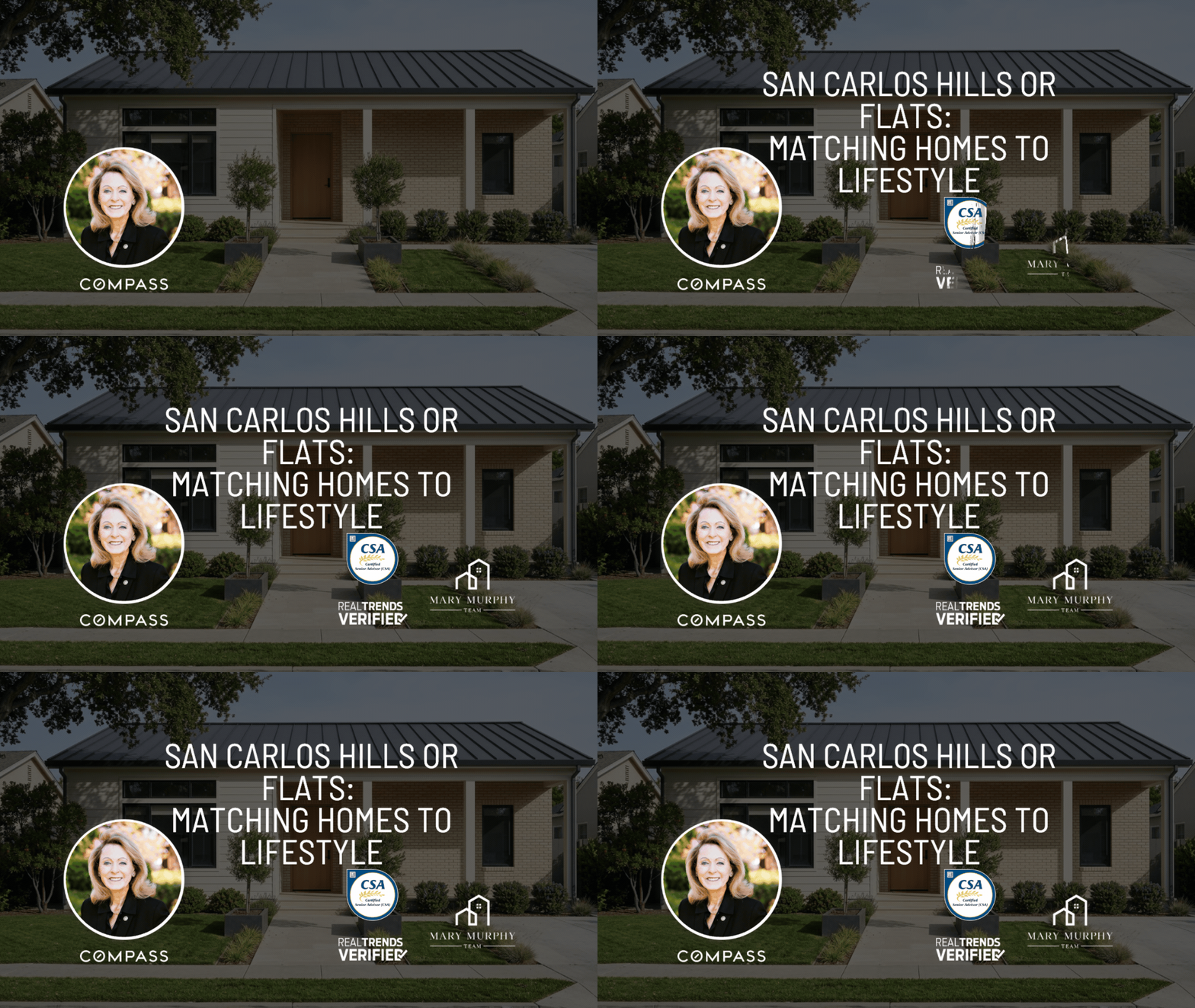
Wondering whether San Carlos hills or flats fit your day-to-day life better? It is a smart question, because in San Carlos, location shapes how you live just as much as the home itself. If you are deciding between walkable access near downtown and a more elevated, view-oriented setting to the west, this guide will help you compare the trade-offs with clarity. Let’s dive in.
Why the Hills-Flats Divide Matters
In San Carlos, the difference between the hills and the flats is not just a local nickname. City planning documents describe a real geographic and lifestyle split between the lower-elevation areas near Downtown and Laurel Street and the western hillside neighborhoods west of Alameda de las Pulgas.
The flatter areas near downtown tend to have older residential blocks, traditional grid streets, higher density, historic homes, and a mix of housing types. The western side of the city follows the contours of the hills, with more topographic streets and, in some pockets near Brittan and Crestview, single-family homes and condos with Bay and East Bay views and private open space.
That makes this less about which side is "better" and more about which setting matches your routine. For many buyers, the choice comes down to daily convenience versus hillside character.
What Life in the Flats Feels Like
If you picture being able to get to restaurants, coffee shops, transit, and errands with less driving, the flats will likely feel familiar and practical. The lower-elevation neighborhoods closest to Downtown San Carlos and Laurel Street are tied most closely to the city’s pedestrian-friendly core.
The city identifies Downtown San Carlos as its primary shopping and dining district. It also notes strong pedestrian amenities, a high concentration of locally owned small businesses, free public parking, and access to both Caltrain and SamTrans in the downtown station area.
For many buyers, that translates into a more connected daily rhythm. You may find it easier to meet a friend on Laurel Street, catch a train, or enjoy a more car-light routine when you live closer to the downtown core.
Flats Home Style and Pattern
The flats also reflect some of San Carlos’ older development history. City infrastructure planning notes that the oldest parts of the city were developed in the 1920s, followed by major growth in the 1940s and 1950s.
Because of that history, homes in the flatter areas often sit within older, more established street patterns. The overall feel is typically more compact, more street-oriented, and more tied to the city's traditional neighborhood fabric.
Flats for Walkability
If your priority is walking to Laurel Street, the flats are the clearest match. The city is continuing to improve the downtown pedestrian experience, and the Downtown Specific Plan includes updates such as better bicycle lanes, improved transit access, and the conversion of the 700 block of Laurel Street into Centennial Plaza.
That kind of planning matters in everyday life. If walkability plays a major role in your housing decision, the lower-elevation neighborhoods near downtown deserve close attention.
What Life in the Hills Feels Like
The hills offer a different kind of value. Instead of being centered on downtown convenience, they tend to appeal to buyers who want a more topographic setting, a little more separation from the core, and in some western pockets, broader views and private open space.
City planning materials describe the western portions of San Carlos as hillside terrain with streets that follow the contours of the land. Near the far western edge around Brittan and Crestview, the city specifically notes single-family homes and condominiums with commanding Bay and East Bay views and private open space.
That setting can create a very different experience from the flatter blocks near downtown. For some buyers, the draw is less about being near the commercial core and more about the shape of the landscape, the sense of elevation, and the visual openness that comes with it.
Hills Home Style and Setting
Later development in San Carlos extended into the western hills, and that affects how many of these neighborhoods feel today. Compared with the denser, older downtown-adjacent areas, the hills often feel more separated and more shaped by terrain.
That does not automatically mean larger homes or a uniform housing type, but it does mean the environment is often more defined by slope, curves, and outlooks. In practical terms, the hills tend to feel more scenic and less grid-based.
Hills for Views and Privacy
If your ideal home experience includes hillside character, private open space, or a view-oriented setting, the hills may be the stronger fit. Some western pockets offer commanding views of the Bay and East Bay, which is one of the clearest distinctions the city identifies.
For many buyers, that trade-off is worth it. You may give up some of the immediate convenience of downtown, but gain a setting that feels more removed and visually expansive.
Comparing Commute and Transit Access
Transit access is strongest near the station area. San Carlos has a wheelchair-accessible Caltrain station, and SamTrans lists connections at San Carlos that include ECR, 260, 295, and 397.
SamTrans also notes that the San Carlos Multi-Modal Transit Center improves accessibility and safety for bus service, shuttles, pedestrians, and bicyclists. That means buyers who want the easiest rail-and-bus access will usually find the greatest convenience closer to downtown and the station.
The hills are not cut off from transit, but they are generally less centered on it. If your routine depends on frequent train access or a more walkable connection to transit, the flats usually offer the simpler setup.
Housing Mix Across San Carlos
San Carlos remains predominantly a single-family home city. The general plan says single-family detached homes make up roughly three-quarters of the housing supply.
At the same time, the city expects multifamily housing to be the fastest-growing type, with recent infill growth concentrated near Downtown and the El Camino Real transit corridor. For buyers, that helps explain why the flats often present a broader mix of housing types, while the hills are more closely associated with hillside single-family homes and some condos in view-oriented pockets.
This does not mean every home in each area fits a single pattern. It does mean your search will likely feel different depending on which side of the city you focus on.
How to Choose Based on Lifestyle
The best choice usually comes from your routine, not just your wishlist. Before you narrow your search, think about how you want a normal Tuesday to feel.
If you are deciding between the hills and the flats, ask yourself:
- Do you want easier access to Laurel Street dining, shopping, and downtown services?
- Do you expect to use Caltrain or SamTrans regularly?
- Do you prefer a more traditional street grid and a neighborhood feel tied closely to the city center?
- Are views, hillside terrain, and a more elevated setting more important than walkable convenience?
- Would private open space and more separation from downtown improve your quality of life?
Your answers will usually point you in the right direction. In San Carlos, the hills-versus-flats decision is often less about price or prestige and more about how you want to live every day.
A Simple Hills vs Flats Comparison
Lifestyle Priority | Flats | Hills |
|---|---|---|
Walkability to Laurel Street | Stronger fit | Less direct |
Access to Caltrain and SamTrans | Stronger fit | Usually less convenient |
Street pattern | Traditional grid in many areas | Curving, contour-based streets |
Setting | Compact and street-oriented | Scenic and topographic |
Views | Less emphasized | Available in some western pockets |
Private open space feel | Varies | More common in some hillside areas |
What This Means for Buyers and Sellers
If you are buying, this comparison can help you search more efficiently. Instead of looking at all of San Carlos the same way, you can focus on the setting that supports your actual routine and priorities.
If you are selling, understanding this distinction helps position your home more clearly. A downtown-adjacent property may appeal most to buyers looking for walkability and transit convenience, while a hillside home may resonate with buyers drawn to views, privacy, and a more elevated setting.
That kind of positioning matters because the same city can speak to very different buyer needs. Clear messaging around lifestyle fit often helps buyers understand value faster and with more confidence.
If you want help weighing San Carlos hills versus flats through the lens of your own goals, Mary Murphy can help you evaluate the trade-offs and plan your next move with a calm, local, process-driven approach.
Mary Murphy | 650-773-4999 | [email protected]
DRE# 00675838

FAQs
Which San Carlos area is better for walking to Laurel Street?
- The flats are generally the better fit because the downtown area is the city’s most pedestrian-friendly district and includes the strongest concentration of shopping, dining, and public transit access.
What do San Carlos hills usually offer that the flats do not?
- The hills can offer hillside terrain, more separation from the downtown core, private open space in some areas, and Bay or East Bay views in certain western pockets.
Are San Carlos hill neighborhoods disconnected from transit?
- No, but the strongest transit convenience is centered around the downtown station area, where Caltrain and SamTrans connections are concentrated.
What kind of homes are most common in San Carlos?
- San Carlos is still primarily made up of single-family detached homes, which account for roughly three-quarters of the housing supply according to the city’s general plan.
Are the flats in San Carlos mostly older neighborhoods?
- Many of the flatter, downtown-adjacent areas reflect earlier phases of city development, including older residential blocks and homes tied to the city’s historic growth pattern.
Is the hills-versus-flats choice in San Carlos really about lifestyle?
- Yes. Based on city planning descriptions, the most useful way to compare the two is daily convenience and walkability in the flats versus scenic terrain, views, and hillside character in the hills.